
During the period from January 1, 2026, through April 30, 2026, the S&P 500 Index outperformed both the Dow Jones Industrial Average (DJIA) and the six public insurance brokers, as measured by MarshBerry’s Broker Index.
The following publicly traded insurance brokers are included in the Broker Index: Arthur J. Gallagher & Co. (AJG), Aon plc. (AON), Brown & Brown, Inc. (BRO), Marsh (MRSH), WTW (WTW) and The Baldwin Group (BWIN).
5.3%
S&P 500
3.3%
DJIA
-14.9%
Broker Composite
Q1 2026 Earnings Results
Public insurance brokers reported flat organic growth rates in the first quarter. The rate environment continued to soften, and brokers focused on operational discipline and strategic investments to drive performance.
Global commercial insurance rates generally continued to soften in Q1 2026, while public brokers reported organic growth rates that were largely flat compared to Q4 2025. The public brokers discussed continued challenging market conditions and macroeconomic uncertainty. Some brokers noted success around M&A strategies and efficiency improvements.
Organic growth rates
Organic growth figures reported in Q1 2026 by public insurance brokers tended to be flat compared to those seen in Q4 2025. Ryan Specialty Holdings and Brown & Brown saw an increase, while the other companies saw flattish organic growth rates compared to Q4 2025.
- AON reported 5% organic growth in Q1 2026, compared to 5% organic growth in Q4 2025.
- AJG reported 5% organic growth across its combined brokerage and risk management segments in Q1 2026, unchanged from its 5% organic growth in Q4 2025.
- BRO posted 0.0% organic growth in Q1 2026, compared to -2.8% organic growth in Q4 2025.
- BWIN reported 2% organic growth in Q1 2026, compared to 3% organic growth in Q4 2025.
- MRSH reported 4% organic growth in Q1 2026, flat compared to 4% organic growth in Q4 2025.
- RYAN reported 11.8% organic growth in Q1 2026, compared to 6.6% organic growth in Q4 2025.
- WTW posted 3% organic growth in Q1 2026, compared to 6% organic growth in Q4 2025.
Selloff in Q1 2026
Shares of public brokers sold off sharply in February after new apps from Tuio and Insurify enabled ChatGPT users to generate insurance quotes using the popular chatbot. The reports fueled investor fears that AI could disintermediate parts of the brokerage model.
That issue emerged as a theme frequently on earnings calls. However, management teams emphasized that the broker business model remains fundamentally relationship-driven. Large commercial clients buy complex, bespoke coverage and rely heavily on trusted advisory relationships, negotiation expertise, and claims advocacy.
“AI can inform decisions, but it does not negotiate with carriers, advocate on behalf of insurers in the claims process or provide bespoke advice to help navigate through complexity,” WTW CEO Carl Hess said.
Executives also emphasized the strategic value of proprietary data. Brokers have spent years standardizing data and building analytics capabilities, which can position them to benefit disproportionately from AI adoption. “AI is most effective when supplied with a vast amount of proprietary data, which WTW has,” said WTW chief AI officer Spike Lipkin.
Outlooks
Overall, brokers were cautious, but constructive, as organic growth remains positive but continues to slow as commercial pricing softens.
WTW remained confident in the ability to deliver on the company’s near-term goals of mid-single-digit growth, continued margin expansion and free cash flow margin improvement. “We remain confident in our long-term outlook and our ability to accelerate performance and drive growth through our investments in our solutions, talent, technology and data. Notably, our AI-enabled solutions are gaining scale and generating growth as they deliver better outcomes for clients,” said WTW CEO Carl Aaron Hess.
RYAN noted that market conditions in both property and casualty are evolving quickly. For its 2026 outlook, RYAN updated its organic growth rate to be in the mid-single digits compared to its prior guidance for high single digits. This guidance includes property rate declines of 25%-35% for the most cat-exposed lines and the recent increase in competition, resulting in a decline in the firm’s property book for the full year.
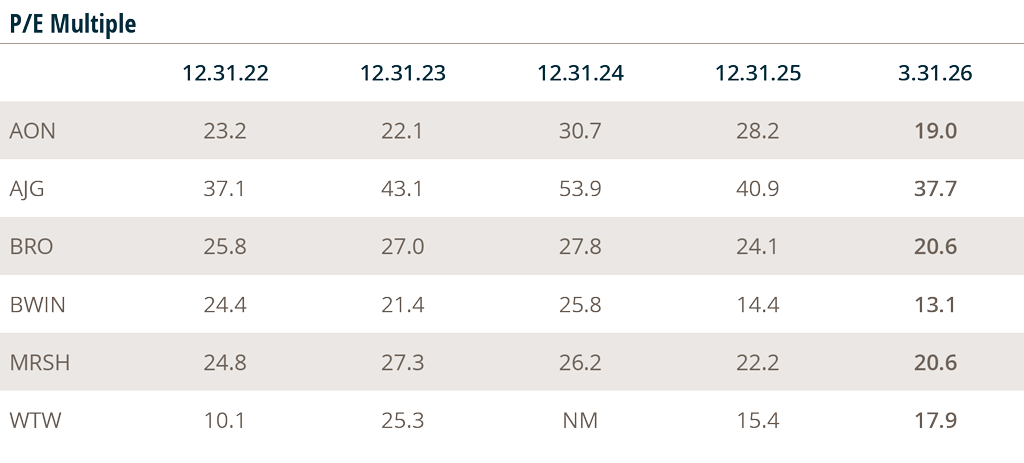
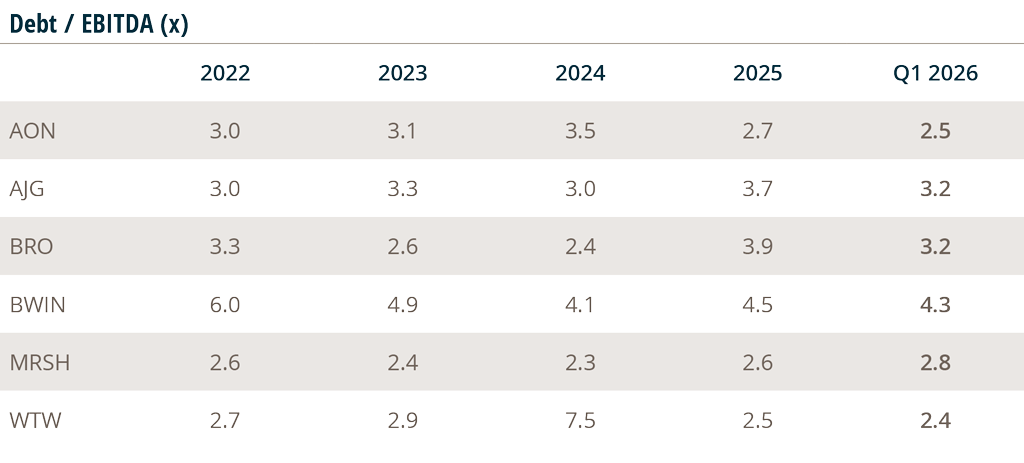
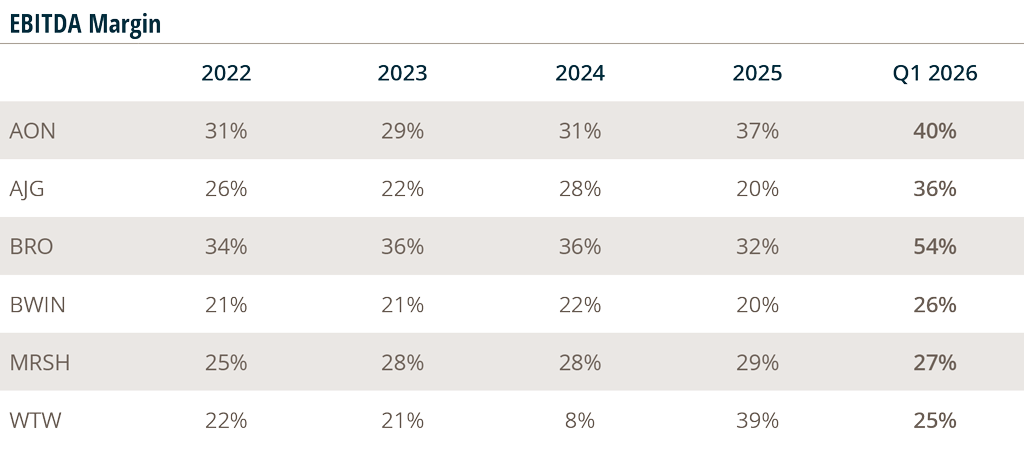
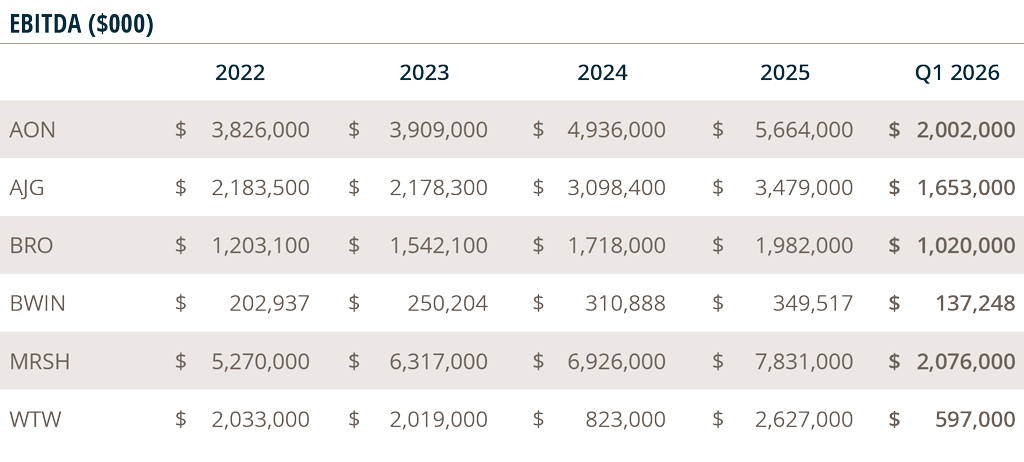
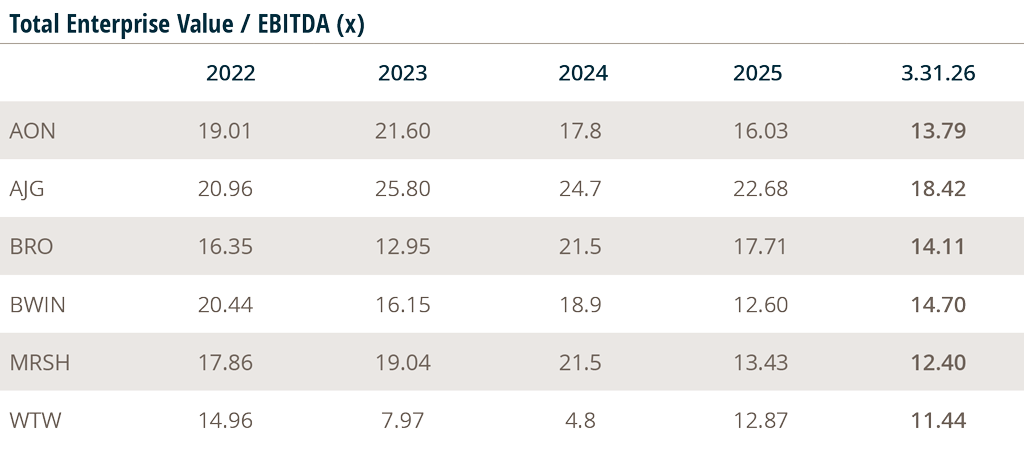
Public Broker Comps
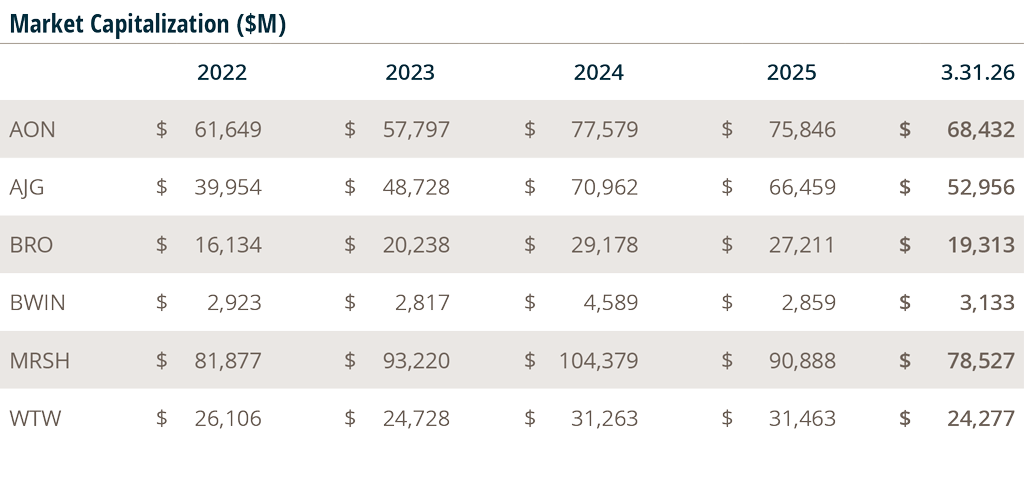
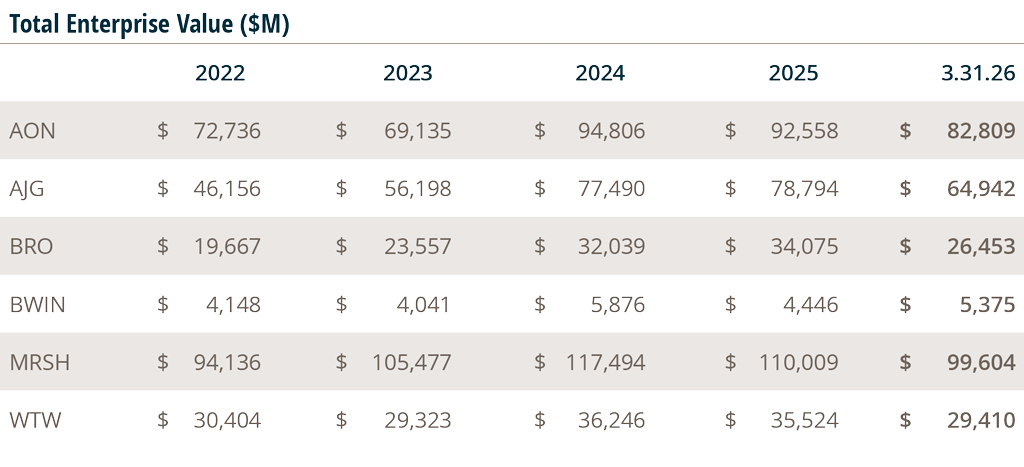
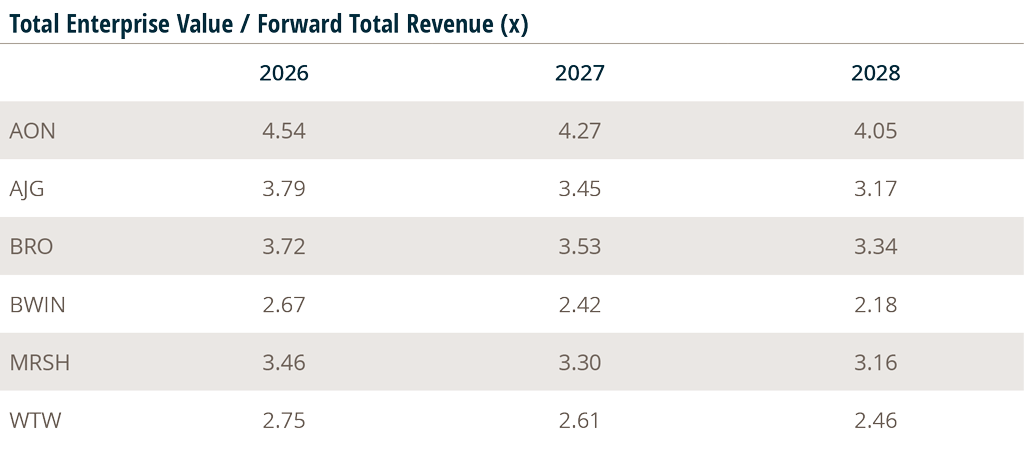
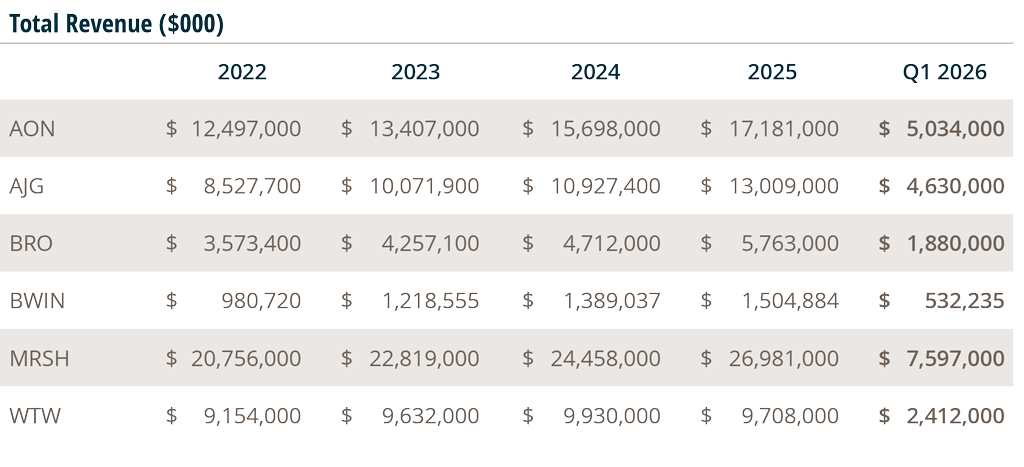
This information is not to be construed as an offer to buy or sell or a solicitation of an offer to buy or sell or to participate in any particular trading strategy. Past performance is not necessarily indicative of future results.


