
At MarshBerry’s annual 360 Forum, a key topic was how independent brokerage owners can develop a strategy framework that can drive meaningful results and give them options whenever the time is right. Many insurance brokerages that choose to remain independent often do so to preserve control over their business, culture, and long-term strategy. Independence allows owners to maintain personal relationships with clients, tailor services without external pressure, and uphold the values that define their brand.
Most independent firms fall into three categories – they’re intentional about remaining independent, they’ve chosen a direction (remaining independent or selling) but still have work to do, or they have no clear direction at all. The best firms don’t choose between independence and a transaction – they build a business that gives them the power to take action later, on their own terms.
Firms that have decided to hold off on a transaction can use the following strategy framework to help turn that decision into a powerful catalyst for success later on.
Get clarity and set the vision with a strategic planning session
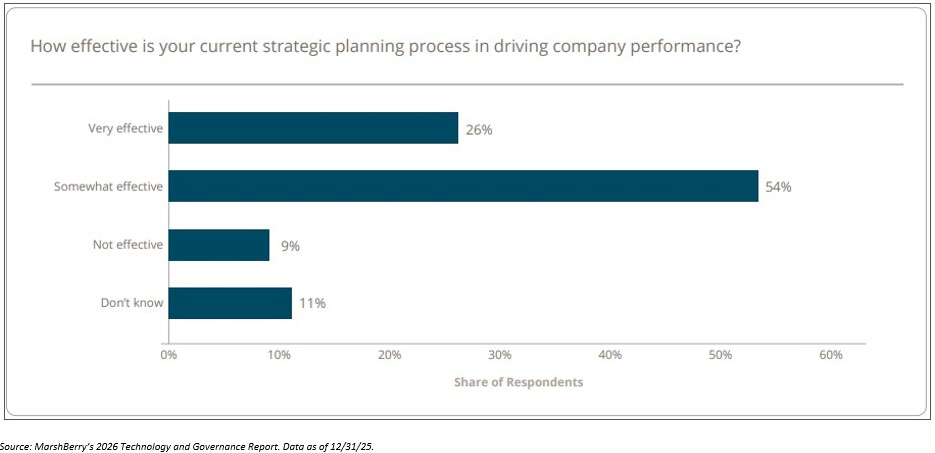
According to MarshBerry’s 2026 Technology and Governance Report, only 26% of firms that intentionally conduct a strategic planning session find the time to be very effective. Further, over 63% of firms report their planning sessions are only somewhat or not effective at all.
So how can firms conduct a strategic planning session that will help them turn their long-term vision into desirable results? The first step requires leaders to determine where the business is now, what the firm wants to be known for, and its long-term legacy and impact. A best practice is to run structured offsite planning sessions with leadership teams, clear agendas, and a neutral facilitator to ensure alignment. Free of distractions, leaders can turn the vision into a plan by:
- Establishing long-term financial projections.
- Creating staffing models and org charts tied to growth.
- Creating initiatives and action items from a SWOT (Strengths, Weaknesses, Opportunities, and Threats) Matrix exercise.
- (Re)defining cultural alignment and core values.
- Creating objective and subjective qualifiers that create a path to equity for top performers.
A critical but often overlooked step is the pre-mortem exercise where stakeholders introspect why the long-term plan could fail, risks or assumptions that might derail it, or contingencies that should be in place. Ultimately, this vision should position the firm for growth and prepare for future opportunities, whether that means selling later or staying independent.
Measure what matters
Strategy without measurement is guesswork. High-performing firms consistently identify key performance indicators (KPIs), benchmark against peers, and use scorecards to track progress. Take a look at available data and consider how the business compares to the market and what should be measured more regularly. This is also a good time to identify data gaps and which critical objectives are falling behind.
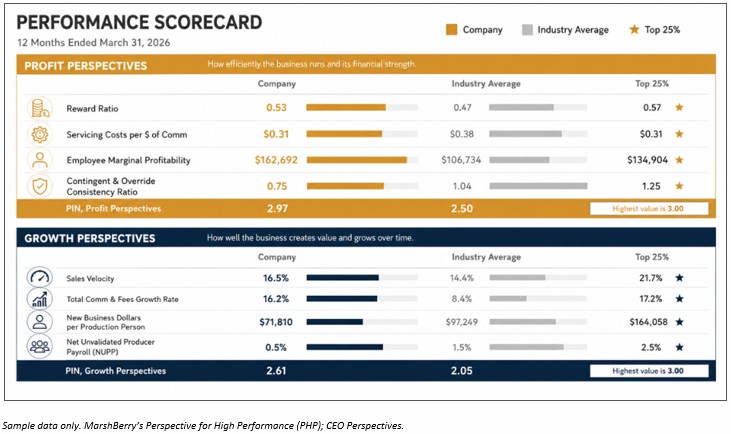
For example, the table below is used by firms to compare their performance to the industry and especially to compare themselves to the top performers in the industry.
“PROFIT PERSPECTIVES” can uncover whether the business is running efficiently and producing strong financial results, while “GROWTH PERSPECTIVES” identify if the firm is creating long-term value and optionality.
Another popular measure to consider including in a strategic plan is the results of an employee engagement survey. Are your employees satisfied? How would they rate your firm’s internal communication, talent development, or recognition practices? Administering an employee survey in the weeks leading up to a strategic planning session can offer cultural insights on what your firm is already doing well, and perhaps what needs to have additional focus for the next planning period.
This type of calibration offers insight into how a firm is performing across critical dimensions and prevents small issues from becoming major problems.
Stay consistent: execute the plan
Execution is where most firms struggle. This step requires clear ownership of initiatives, regular monitoring cadence (meetings, reporting cycles), and accountability systems tied to KPIs and compensation. Revisit action items and hold teams accountable, track progress on goals, and identify any necessary adjustments.
When firms prioritize consistency, strategy becomes actionable and repeatable. Clear ownership ensures initiatives move forward, while regular monitoring keeps performance on track and allows teams to address issues early. Tying goals to measurable KPIs – and reinforcing them through compensation – drives accountability and sustained focus. Over time, this discipline builds momentum, aligns teams around shared priorities, and turns strategy from a plan into daily behavior. The result is steady, intentional progress toward long-term goals rather than reactive decision-making.
The ultimate goal of strategy isn’t just growth – it’s optionality. Whether a firm chooses to remain independent, partner, or sell in the future, a strong strategy ensures that choice is deliberate, not reactive. The question isn’t whether the business has a strategy, it’s whether that strategy is clear, measurable, and consistently executed.