
An insurance brokerage’s compensation plan touches nearly every part of the business, from growth strategy to profitability to talent attraction and retention, even long-term firm value. Strong compensation models motivate producers to drive new business, supporting organic growth. However, as a firm’s largest expense, it’s important to understand the entire compensation ecosystem across an organization and the changes that can impact success the most.
One of the best starting points for firms looking to measure and optimize their compensation plan is understanding what other firms, especially top-performing ones, are doing. Benchmarking the business’ approach to peers, competitors, and top performers can help create better long-term salaries and overall budget planning decisions.
MarshBerry’s 2026 Insurance Agency & Brokerage Compensation Report reveals what top-performing firms are doing to remain competitive, including details of methodologies for driving maximum revenue and growth. This annual study surveyed firms on their 2025 compensation policies, processes, and strategies for roles commonly found across most insurance brokerages as well as their expectations for the coming year.
What the data reveals
This study is intended to help brokerages better understand the landscape of total compensation, benchmarks to measure against, and evolving trends. It is broken out across four employee categories:
- Executive and management
- Production personnel
- Service personnel
- Support personnel
In addition, the study includes findings related to employee benefits, remote work and flexible arrangements, and employee engagement.
Leadership pay continues climbing
Executive and management base salaries rose 4.6% in 2025, reflecting sustained demand for leadership talent in a competitive market. Bonus growth was higher than expected at 3.3%, primarily due to improved profitability in 2025 from 19.1% to 20%. Respondents did note that moderating organic growth would most likely drive smaller salary and bonus increases in 2026.

Source: MarshBerry 2026 Compensation Study.
Producers: the revenue drivers
When evaluating producer compensation, MarshBerry segments producers into two categories – validated and unvalidated producers – because they are in different stages of their careers and tend to be compensated differently. Validated producers usually generate enough business to merit higher compensation (including benefits). Unvalidated producers are typically newer employees (less than three years) and are not generating enough business to cover their compensation.
Compensation for validated producers is often tied to commission and linked to their books of business. However, firms use various compensation methods for these producers, some incorporating a salary.
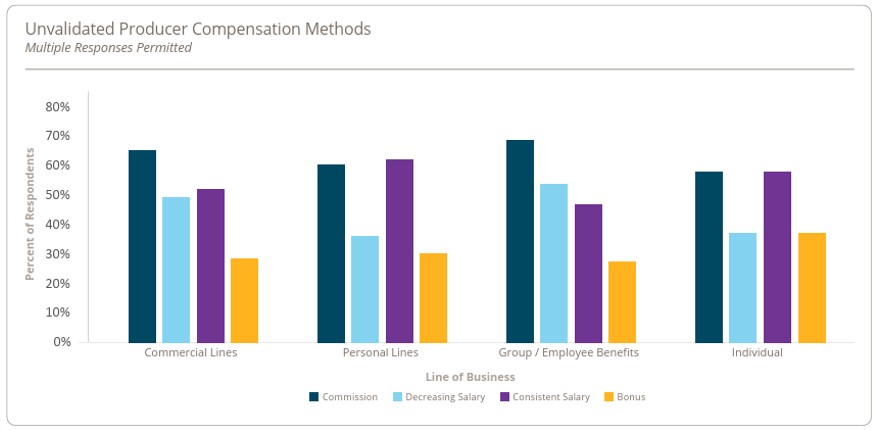
Source: MarshBerry 2026 Compensation Study.
Service personnel: the backbone of the operation
Learn More
In the average firm, service personnel comprise 58% of total personnel and service payroll makes up 39% of total payroll expense. On average, there are 2.8 service staff for every producer. In 2025, service personnel compensation recorded the largest percentage increase of all functions, with salaries rising by an average of 5%. Looking ahead, 90% of respondents anticipate further salary increases in 2026.
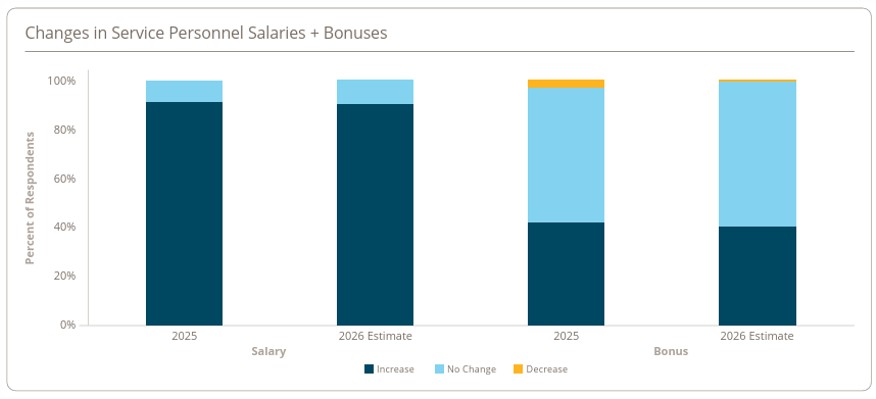
Source: MarshBerry 2026 Compensation Study.
Support personnel: the unsung enablers
Support personnel support the entire organization rather than a specific department. Support functions include accounting and finance, general office management, human resources, and information technology personnel. In 2025, the average firm had one support staff member for every
8.3 full-time equivalent (FTE) employees – a slight increase from 8.1 in 2024. Support staff salaries advanced 4.0% in 2025, with participants expecting a similar increase in 2026. When it comes to bonuses, nearly two-thirds reported no change in 2025 and do not anticipate any changes in 2026.
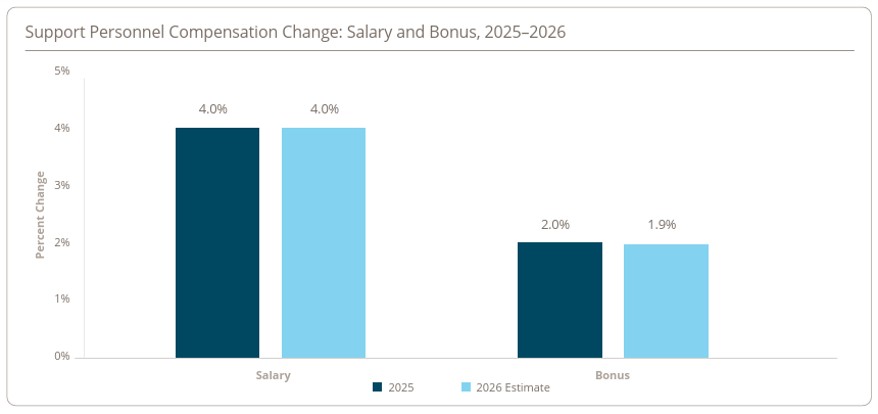
Source: MarshBerry 2026 Compensation Study.
The value of a compensation study
MarshBerry’s comprehensive, one-of-a-kind industry report evaluates compensation trends across multiple roles in insurance brokerage. It provides over 100 charts illustrating respondent data and detailed insights into the results. The report allows insurance brokerages to benchmark where their firm sits in the range of industry peers on compensation approaches. It can reinforce their current approach or reveal areas for change. As insurance brokerages continue to look for ways to grow their business, whether through their product offerings, service capabilities, or technology upgrades, people will always be at the root of everything they do. Having a top-performing organization with top-performing personnel starts with a top-performing compensation strategy.
Learn more about MarshBerry’s 2026 Insurance Agency & Brokerage Compensation Study.